
Wholegrain Flour as a Foundation for a Healthy Diet: An Evidence-Based Guide to Better Choices
More people today are becoming aware of the role nutrition plays in health and quality of life. Yet myths, misconceptions and superficial labels in shops can make it difficult to understand what is truly healthy and how to achieve it through everyday food. This article looks at wholegrain flour and its role in the diet, and at how a balanced diet can support good health without unnecessary reliance on supplements.
The difference between wholegrain and regular wheat flour
Regular wheat flour is made by removing the bran (the outer layer of the grain) and the germ (the heart of the grain), leaving only the endosperm. This process removes important nutrients: fibre, vitamins (especially B vitamins), minerals and phytonutrients.
Wholegrain flour, on the other hand, contains every part of the grain: the endosperm, bran and germ. It provides:
- more fibre, important for digestive health and feeling full
- vitamins and minerals, such as B vitamins and iron
- antioxidants and phytonutrients, which have health-supporting properties
Wholegrain flour is therefore more nourishing than white (refined) flour, which is often described as “empty energy”. Read more in our article “Why Choose Wholegrain Wheat Products, Not Just ‘Darker Bread’?”
Wholegrain flour and a balanced diet: a scientific perspective
Many nutrition experts and studies emphasise that so-called “quality carbohydrates”, such as wholegrain products, are associated with a lower risk of cardiovascular disease, obesity and type 2 diabetes:
- Studies have shown that regular wholegrain consumption is associated with a lower risk of cardiovascular disease and better body-weight control. (Ye et al., 2012)
- Dietary carbohydrate quality affects blood glucose and insulin responses. Wholegrain products support slower glucose absorption, which helps long-term metabolic health. (Jenkins et al., 2002)
These studies emphasise that vitamin and mineral tablets are not a panacea when a person’s everyday diet is rich in nourishing, natural foods, including wholegrain products.
Do wholegrain flours “remove the need for supplements”?
Using wholegrain flour does not in itself mean that supplements are never needed. In some situations, such as:
- a deficiency of a particular vitamin
- pregnancy
- specific metabolic conditions
additional supplementation may be needed. However, in many cases, a large part of the population may be less dependent on supplements when the diet is centred on natural, nourishing foods, including wholegrain flour and products made from it.
Practical tips
- Choose wholegrain bread, pasta, porridge and biscuits with a clear “wholegrain” ingredient on the label.
- When comparing labels, look at fibre per 100 g: the higher it is, the better. Read more in our article “What Really Determines Bread’s Nutritional Value? Numbers, Labels and the Wholegrain Illusion”.
- Include other nourishing foods in your diet too: vegetables, fruit, legumes and protein foods.
Conclusion
Wholegrain flour is more than an alternative to white flour; it is a valuable part of the diet with sound scientific support for better health. Regularly eating wholegrain products may reduce the risk of cardiovascular disease, diabetes and excess weight. A balanced diet also provides the body with the nutrients it needs, making it a more effective path to health than excessive use of supplements.
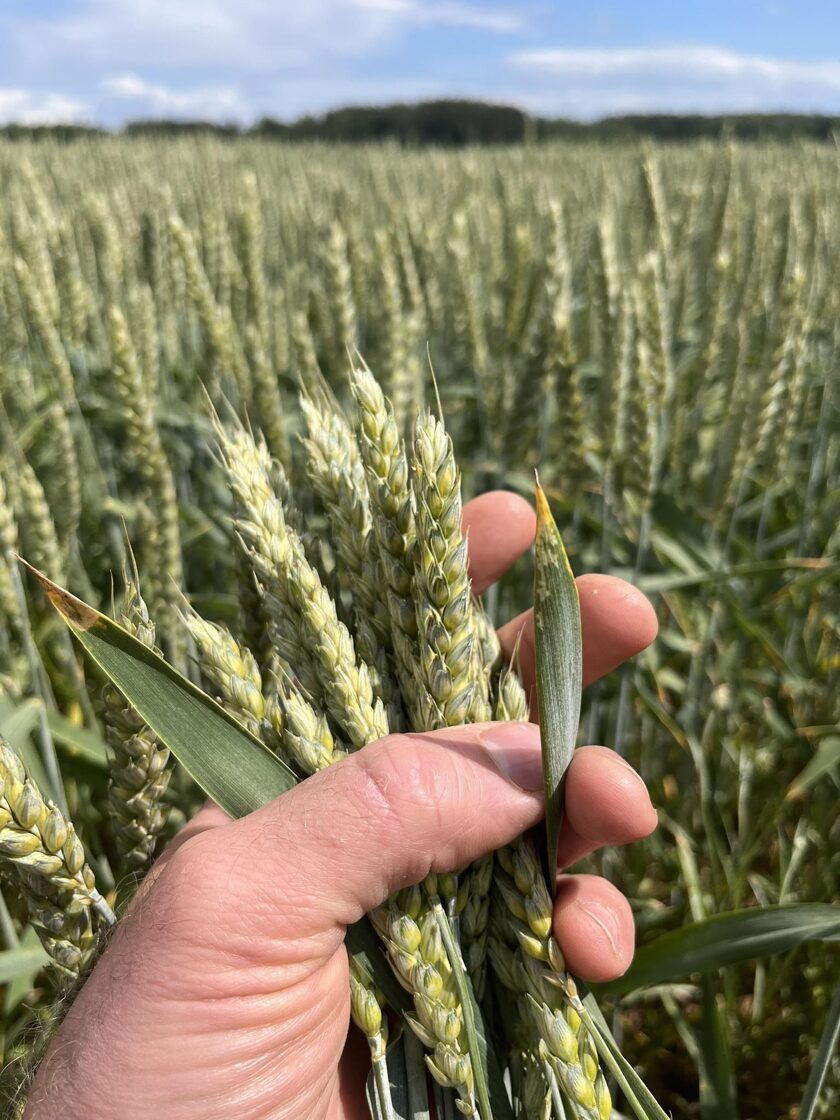
📸 In the Svēte area, Jelgava Municipality
Sources
- Ye, E. Q., Chacko, S. A., Chou, E. L., Kugizaki, M., Liu, S. (2012). Greater whole-grain intake is associated with lower risk of type 2 diabetes, cardiovascular disease, and weight gain. The Journal of Nutrition, 142(7), 1304–1313.
- Jenkins, D. J., Kendall, C. W., Augustin, L. S., et al. (2002). Effect of wheat-based soluble fiber on glycemic control and the metabolic profile in type 2 diabetes. Diabetes Care, 25(10), 1777–1782.
- Slavin, J. (2004). Whole grains and human health. Nutrition Research Reviews, 17(1), 99–110.
- Mellen, P. B., Walsh, T. F., Herrington, D. M. (2008). Whole grain intake and cardiovascular disease: a meta-analysis. Nutrition, Metabolism & Cardiovascular Diseases, 18(4), 283–290.